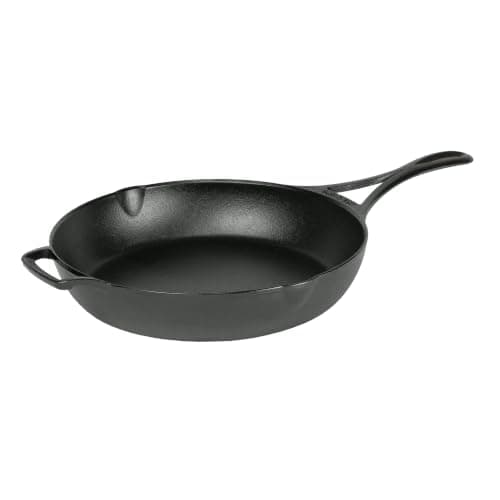
Blacklock is the right Lodge for you if your complaint about cast iron is the weight. Lodge describes the line as engineered to be lighter than traditional iron and triple seasoned with 100% natural vegetable oil, it is made in the USA, and it costs a little over double a standard Lodge rather than the six-to-eight times a boutique pan asks. It is nota machined pan, Lodge has never claimed it is, and if a glass-smooth milled interior is what you are shopping for you are on the wrong page — go to the smooth skillets.
Blacklock is the most misunderstood pan Lodge sells. It is darker, it is noticeably lighter in the hand, it feels slicker on the shelf, and the price sits in the gap between the twenty-five dollar classic and the hundred-and-fifty dollar boutique pans. All of which leads a lot of buyers to conclude it is Lodge's answer to Stargazer and Field.
It is not. It is a thinner Lodge with more factory seasoning and a better handle. That is a genuinely useful product and it solves a real complaint — it is just a different complaint from the one the boutique pans solve. This review is mostly about keeping those two straight, because getting it wrong is how people end up disappointed by a perfectly good skillet.
What Lodge actually claims
Worth laying out, because the claims are specific and the gaps are informative. From Lodge's own Blacklock pages:
And the claim that is absent from every Blacklock page we read: any mention of machining, milling or a cut cooking surface. Compare the wording the makers who domachine use — Stargazer says its interiors are CNC machined across the entire interior surface; Field says its pans are machine polished, like the best vintage cast iron skillets. Lodge says neither. We are not going to upgrade a manufacturer's own wording for them.
So why does it feel smoother?
Two reasons, and neither is machining. First, it is a sand casting like every other Lodge, but a thinner and more carefully finished one. Second — and this is the real answer — seasoning is polymerized oil, and it builds up in the low spots of a textured surface first. Three factory coats instead of one means more of that texture is already filled on the day it arrives.
Which is a useful thing to understand, because it tells you what happens next: a standard Lodge cooked on regularly fills its own texture in and heads toward the same place over months. Blacklock buys you a head start on a process that happens anyway. A milled pan, by contrast, buys you a surface a sand casting never reaches.
The trade Lodge does not advertise
Thinner iron is lighter. It also stores less heat. That is not an opinion, it is what thermal mass means: a pan's ability to keep its temperature when cold food lands in it is a function of how much metal is in it. Drop four cold burger patties into a thin pan and the surface temperature falls further and recovers more slowly than it would in a thick one, and browning is what suffers.
In practice, for normal weeknight cooking, this is small. Two eggs, a couple of chicken thighs, a cornbread — you will not notice. Where you will notice is the hard-sear end of the repertoire: a crowded pan of smash burgers, a thick ribeye straight from the fridge, a big batch of anything seared in one go. For those, a heavy classic Lodge or a 12-inch is the better tool, and our steak pan roundup reflects that.
So the two headline features of this pan pull in opposite directions, and you should buy it knowing which one you came for. Lighter and slicker, in exchange for a little less searing authority. That is an entirely reasonable trade for most households. It is a bad trade if searing is the thing you bought cast iron to do.
The handle, which is underrated
Lodge gives Blacklock an extended, raised handle rather than the stubby one on the classic pan. Handles are the thing owners actually comment on after a year, not surface finish — a longer handle is more leverage, and a raised one puts your hand further from the heat and gives a mitt something to grab.
Combine that with the lower weight and the day-to-day difference between this pan and a standard Lodge is bigger than the spec sheet suggests. If you have ever two-handed a 12-inch Lodge out of a 425°F oven and wished you had not, that is the feeling Blacklock is aimed at.
Specifications, and what we will not pretend to know
Lodge publishes per-size figures on the Blacklock product page. The page as we could retrieve it rendered the 7-inch at a published 1.82 lb, with the 10.25-inch and 12-inch offered as separate sizes. We could not retrieve a published 10.25-inch weight from Lodge, and retailer listings are not the manufacturer, so we are not going to quote a figure for it.
What that leaves is the claim Lodge does stand behind for the whole line: lighter than its traditional iron. Treat that as the shape of the difference rather than a number, and if a precise weight matters to your decision, check the figure on the size you are buying at the point of sale. We would rather be short a specification than quote one we cannot source.
Blacklock versus the alternatives
Versus a standard Lodge 10.25-inch
The classic pan costs a fraction of this one, holds more heat, and gets slicker on its own over a year of cooking. It is still the right first skillet for almost everyone, and it is what our beginner pick says. Buy Blacklock over it only if you have already decided that weight or handle is your problem.
Versus a Stargazer or a Field
Those are machined pans and this is not, so the comparison is about what you want rather than which is better. Stargazer's interior is cut flat and its handle is the best in the category; Field is the lightest iron we rank. Both cost multiples of a Blacklock. Our Field vs Stargazer and Lodge vs Stargazer pages run those matchups properly.
Versus a carbon steel pan
Worth raising, because carbon steel is the other answer to “cast iron is too heavy.” It is thinner and lighter again, seasons the same way, and gives up more stored heat. If weight is your whole complaint, read cast iron vs carbon steel before you settle on Blacklock.
Versus buying nothing
The option most review pages skip. If you already own a Lodge and it works, the honest answer is that Blacklock will not transform your cooking. Seasoning your existing pan properly and learning to preheat it will do more — see how to season cast iron and how to preheat it.
Who should buy it
Buy it if:you cook on cast iron and find it heavy; you want a pan that starts closer to nonstick without boutique money; you want American-cast iron and the classic pan's handle annoys you; or you are buying a gift for someone who will like that it feels nicer than a hardware-store pan.
Skip it if: you want a milled, glass-smooth interior (buy Stargazer); you mainly hard-sear big batches (buy a heavy classic Lodge or a 12-inch); you have never owned cast iron at all (buy the cheap Lodge first and find out whether the ritual sticks); or you already own a well-seasoned skillet that you are happy with.
The verdict
Blacklock is an honest product sold with honest copy, and most of the confusion around it comes from readers and reviewers filling in a machining claim Lodge never made. Judged for what it is — a thinner, better-seasoned, better-handled American cast-iron skillet at roughly double the price of the cheapest good pan on the market — it is a good buy for the specific person whose complaint is weight.
Judged as a budget alternative to a milled boutique pan, it is the wrong tool and will disappoint. The surface is better than a standard Lodge's on day one and it is not in the same conversation as a machined interior. Know which pan you are buying, and it is hard to be unhappy with this one.
Buying a Blacklock without buying the wrong thing
Decide which complaint you are solving
Weight, surface, or handle. Blacklock fixes weight and handle and improves the surface a little. A machined pan fixes the surface and often makes weight worse. Food sticking is usually neither — start with why food sticks to cast iron before you spend anything at all.
Pick the size you cook in
Lodge offers Blacklock in 7-inch, 10.25-inch and 12-inch. The 10.25-inch is the household size; the 7-inch is an egg-and-one-serving pan; the 12-inch needs a big burner. Our skillet sizes guide and 10 vs 12 inch set the choice out.
Triple seasoned still means seasoned, not sealed
Three factory coats is a head start, not a finish line. It needs the same routine as any bare pan — cook in it, dry it on the burner, keep a thin film of oil on it. Anyone selling foundry seasoning as maintenance-free is overselling it.
Do not pay a premium for the thinner pan and then hard-sear in it
If your weeknight cooking is crowded pans of meat, buy the thick pan. The thin one is for cooks who want to pick the pan up comfortably, and those are different jobs.
Compare against the classic at the live price, not the list price
The gap between a standard Lodge and a Blacklock moves. The classic pan discounts hard and often; the premium line less so. The figure in the buy button here is pulled live and stamped with the date it was checked — check it against the Lodge skillet lineup before you decide the premium is worth it today.
If you want American and cheap, you already have options
Every bare Lodge is American-cast, including the cheapest one. Blacklock is not the way to buy American — it is the way to buy lighter. Our American-made roundup lays out the whole field.