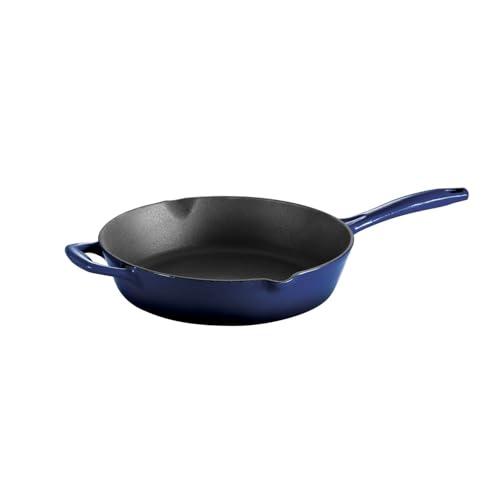
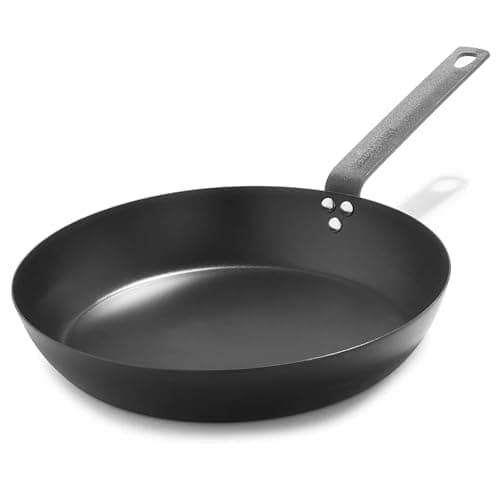
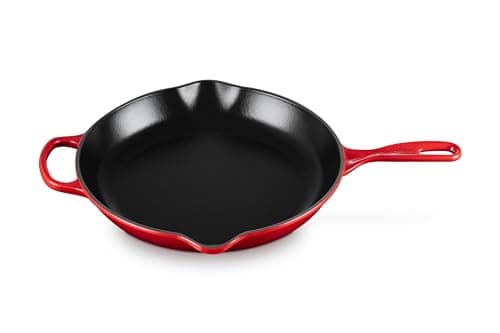
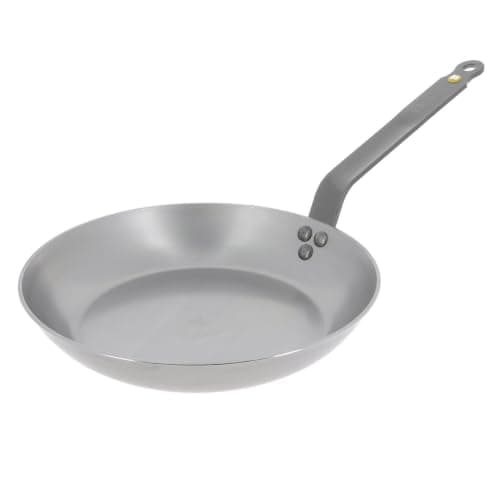
The best cast iron skillet alternative is the De Buyer Mineral B carbon steel pan, best for a cook who wants iron’s searing in something a third the weight. The budget pick is the Tramontina enameled 10-inch, which is the cheapest way to stop seasoning a pan entirely. Which one is right depends on which of cast iron’s three real problems you have: the weight, the care ritual, or its dislike of acid. They have different answers, and swapping blindly gets you the wrong pan.
Problem one: the weight
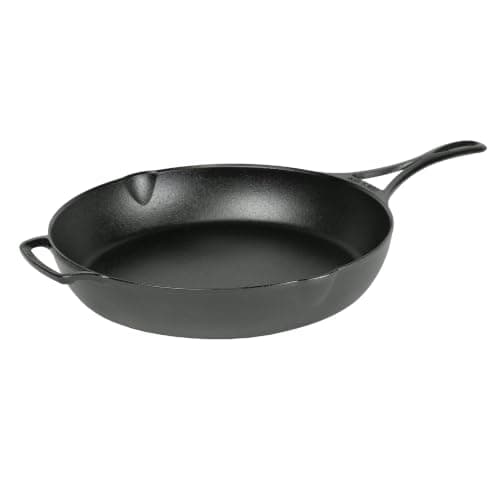
This is the big one, and the biggest search behind this page is literally about small apartments. A 10.25-inch Lodge is a published 5.66 lb empty and the 12-inch is about 8 lb; add food and you are lifting that one-handed out of an oven. For a small kitchen with a small sink and a high cupboard, that is the difference between a pan you use and a pan you resent.
Carbon steel is the real fix. Because cast iron is poured into a mould it has to be thick enough to pour and to resist cracking; carbon steel is rolled, so a 2 to 3 mm sheet does the same metallurgical job at a fraction of the mass. The same seasoning chemistry applies, the same searing applies, and the pan is light enough to swirl. The cheaper route to the same fix is the pre-seasoned Merten & Storck 12-inch, and the best carbon steel skillets ranks the whole field.
If you want to stay in cast iron, the honest halfway house is a thinner casting: the Lodge Blacklock is engineered lighter than Lodge’s classic iron at the same diameter and triple-seasoned at the foundry. The best lightweight cast iron skillets is the page for that route, and the best cast iron for a small kitchen covers storage and sink size.
Problem two: the care ritual
Bare iron asks for a relationship: dry it immediately, keep it oiled, rebuild the polymerized-oil layer when it thins, and accept that a wet pan in a drainer rusts. Plenty of people simply do not want that, and the pan ends up unused, which is worse than owning the wrong pan.
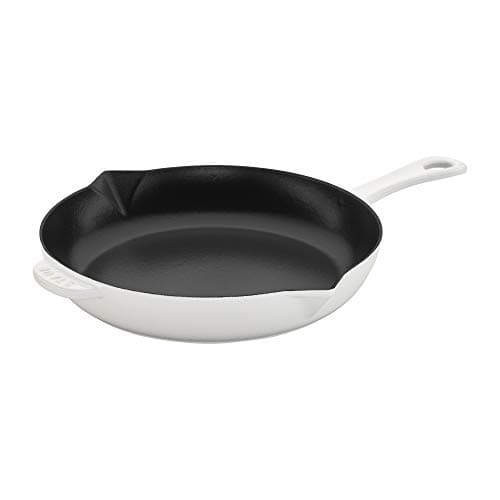
Enameled cast iron is the clean answer. The interior is powdered glass fused to the iron, so there is nothing to season and nothing to rust: soap, water, done. Le Creuset publishes that its Signature skillet is finished with a black satin enamel interior, requires no seasoning and is oven-safe to 500 degrees Fahrenheit, and the Tramontina does the same job for a fraction of the money.
What you lose is real and we will not hide it: enamel never becomes naturally non-stick the way seasoned iron does, because there is no seasoning layer to build. An enameled pan is a searing and braising pan, not an egg pan. The best enameled cast iron skillet and enameled versus bare cast iron both take that trade apart.
Problem three: tomatoes, wine and lemon
A long acidic simmer strips seasoning from bare iron and can give the food a metallic edge. If half of what you cook is tomato sauce, ragu or a wine reduction, bare iron is genuinely the wrong tool and no amount of technique fixes it. Enamel is glass and does not react at all, which is why every enameled pot and pan on this site is recommended for exactly this. See can you cook tomato sauce in cast iron for the full version.
What is NOT on this page, and why
Nonstick. It is the substitute most people reach for and it answers a different question: a PTFE pan is light and easy and it cannot sear, because its coating cannot survive the temperatures browning needs, and it wears out. If what you want from a pan is eggs and nothing else, buy nonstick and be happy; if you came here because you like what cast iron does to a steak, nonstick is not the answer. Cast iron versus nonstick is the head-to-head.
Stainless steel is also absent, for a simpler reason: we do not sell it. It is a legitimate alternative — non-reactive, dishwasher-safe, fond-friendly, and much worse at holding heat — and cast iron versus stainless steel and cast iron versus stainless steel for steak argue it honestly from the iron side.
What no alternative gives you
Thermal mass. A thick sand-cast pan barely drops in temperature when four cold steaks hit it, and every substitute on this page is either thinner (carbon steel) or coated in glass that caps how you can treat it (enamel). That is the price of fixing the weight or the ritual, and it is worth knowing before you buy rather than after.
If none of the three problems above is actually yours, the honest advice is to keep the iron pan and read cast iron skillet common problems instead — most reasons people give up on cast iron are fixable in an evening. And if the problem is the finish rather than the material, the best smooth cast iron skillets is the page you want.
How the prices on this page work
Every number comes from the live Amazon listing at the date stamped under the comparison table, read through this site’s price layer. Where there is no verified live offer we print no number and the button still takes you to the listing.