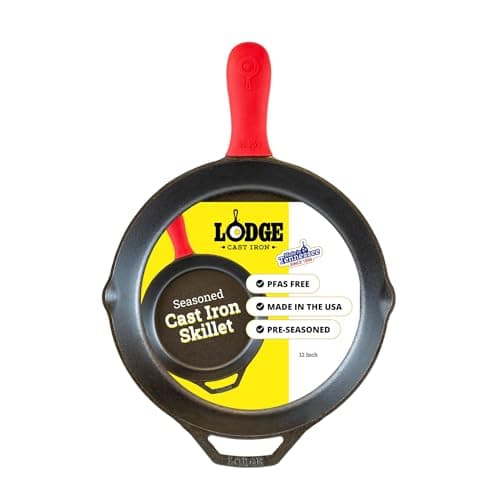
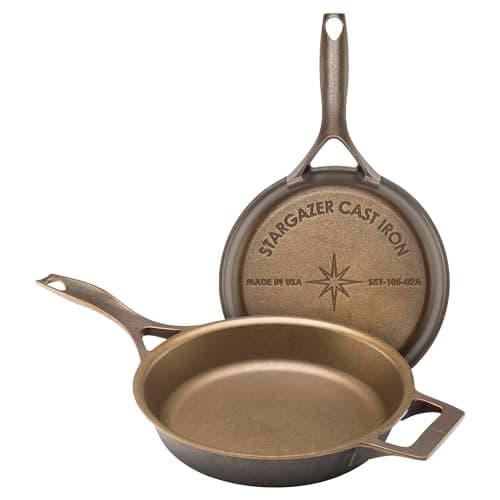
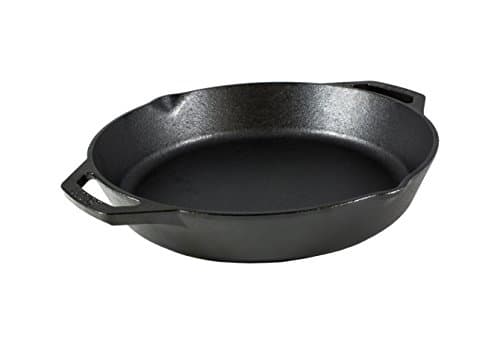
For steak, cast iron beats stainless steel, and the pick is the Lodge 10.25-inch — best for a cook who wants the hardest crust for the least money. Stainless steel wins two real arguments back: it makes a better pan sauce and it goes in the dishwasher. But a crust is a searing problem, searing is a stored-heat problem, and a cast iron skillet simply holds several times more heat than a clad stainless pan of the same size. We do not sell stainless, so there is no stainless pick or price on this page; what follows is the honest mechanism either way.
The whole argument in one paragraph
Put a cold 1.5-inch steak into a hot pan and the pan’s surface temperature drops instantly. Whether you get a crust depends on how far it drops and how fast it comes back, and that is thermal mass — how much heat the pan was holding in the first place. A sand-cast iron skillet is several millimetres of solid iron. A tri-ply stainless pan is two thin stainless skins around an aluminium core, and the whole sandwich is usually thinner and much lighter. The iron pan stays above the temperature Maillard browning needs; the stainless pan is more likely to fall below it and start steaming the meat in its own released water.
Where stainless genuinely wins
Fond and pan sauce. This is not a small point. Stainless is non-reactive and has no seasoning layer to protect, so you can deglaze aggressively with wine, stock or lemon, scrape every browned scrap off the base and reduce it into a sauce. On seasoned iron, a long acidic reduction strips seasoning and can leave a metallic note. If a red wine jus is as important to you as the crust, stainless is the better tool for that half of the job.
Weight and upkeep. A clad stainless pan weighs a fraction of a 12-inch iron skillet, goes in the dishwasher, and never rusts if it sits wet in a drainer. Cast iron asks for a seasoning layer you maintain. For a lot of households that is the deciding factor, and our cast iron skillet alternatives page is written for exactly that reader.
Visibility. You can see the colour of the fond in a stainless pan. In a black iron pan you cannot, which is a genuine skill barrier when you are learning to judge a sauce.
Where cast iron wins, specifically for steak
Recovery between steaks. One steak is not the test; the second and third are. A heavy iron pan still has enough stored heat for a second steak immediately. A thin pan needs to be brought back up, which is when people start cooking grey steaks and blaming the meat.
Oven transfer. A thick-cut steak is best finished in the oven, and an all-iron skillet with a cast handle has no plastic, no rivets to loosen and no temperature limit that matters. You put the whole pan in at 450 degrees without a thought.
Basting. Butter-basting with thyme and garlic needs a pan that keeps the butter foaming rather than cooling into a puddle, and that is stored heat again. Our cast iron steak method and filet mignon guide both lean on it.
Price. The pan that wins this comparison costs about twenty-five dollars. A comparable clad stainless skillet from a serious maker costs several times that. In almost no other cookware argument does the better tool also happen to be the cheap one.
What about heat conduction? Does iron not heat unevenly?
It does, and that is a real criticism that gets misapplied here. Cast iron conducts heat sideways poorly — worse than the aluminium core in a clad stainless pan — so a cold iron skillet on a small burner develops a hot ring and cool edges. The fix is not a different pan, it is a longer preheat, which lets conduction even the pan out before food goes in. Once it IS evenly hot, its mass keeps it that way far better than aluminium can. See why cast iron heats unevenly and how to preheat cast iron.
The induction wrinkle
If your hob is induction, there is a compatibility point in iron’s favour. Cast iron is strongly ferromagnetic and couples to an induction hob without any help. Many austenitic stainless pans are not magnetic in themselves and need a bonded magnetic base layer to work at all — most cookware stainless has one, but it is a thing to check. See the best cast iron for induction.
The third option most people should consider
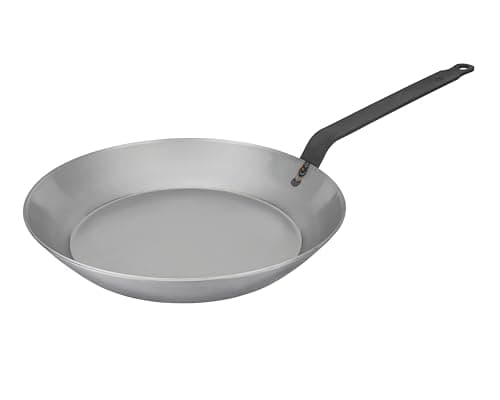
Carbon steel sits between the two: it seasons and sears like iron, and it is rolled thin so it handles and weighs like a stainless pan. It does not hold as much heat as cast iron — so for steak specifically it is second place — but if you want one pan that sears well and is not a dumbbell, the Matfer Bourgeat on this page is the serious candidate. The best carbon steel pans for steak ranks that field properly.
What about a grill pan?
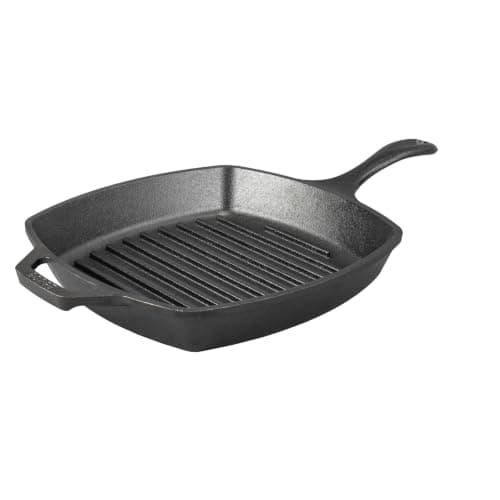
Ridges give you stripes and lose you crust. A ridged pan only touches the meat along the bars, so most of the surface never browns, and the valleys collect fat and steam. It is the right pan if the look is the point and the wrong one if the crust is. The Lodge square grill pan is here for that reader and ranks last on purpose; grill pan versus skillet is the full argument.
So: which should you buy?
If you are buying one pan for steak, buy cast iron, and buy the cheap one. If you already own clad stainless and cook steak occasionally, you do not need to replace it — dry the meat hard, do not crowd the pan, cook one steak at a time, and finish in the oven. If you want both arguments, the practical kitchen answer is an iron skillet for the sear and your existing stainless pan for the sauce. Our general cast iron versus stainless steel comparison covers everything beyond steak, and the best cast iron for steak is the full roundup.
How the prices on this page work
Every number comes from the live Amazon listing at the date stamped under the comparison table, read through this site’s price layer. There is no stainless price here because we carry no stainless listing — we would rather show nothing than a figure we cannot verify.