Skip to content
Hearth & Patina

Guides & Comparisons

Cast Iron Skillet vs Pizza Stone

Metal conducts heat roughly a hundred times better than a baking stone does. That single fact decides this whole comparison - and it decides it differently for pizza than for bread.

By Stephen V.Updated How we research
#ad

We earn a commission when you buy through our Amazon links, at no extra cost to you. It never affects our rankings, and we say so when the cheaper pan is the better buy. How this works.

Top pick

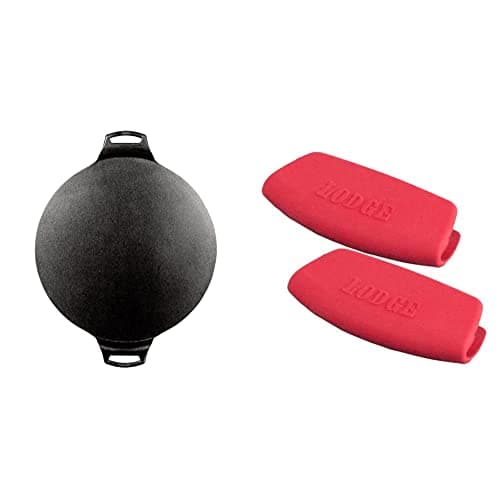
Lodge Lodge 15" Cast Iron Pizza Pan with Silicone Grips

Lodge 15" Cast Iron Pizza Pan with Silicone Grips

15 in roundFlat, low rimSilicone grips incl.Made in USA
$41.98View on Amazon

$49.8016% off

Price as of October 5, 2026. Prices change — Amazon's is the one that counts.

#ad · we may earn a commission from this link to Lodge 15" Cast Iron Pizza Pan with Silicone Grips

For pizza, buy the metal. A 15-inch cast-iron pizza pan gives you a full-size round of fast-conducting iron with a low rim, so it cooks the base hard and fast the way a pizza needs and is not going to crack— which is how most ceramic stones eventually die. Wikipedia's own summary of the mechanism is that a stone is deliberately a poor heat conductor so “food is less likely to burn”. For pizza, aggressive bottom heat is the entire goal.

Runner-up and the pan most people already own: a 10.25-inch cast-iron skillet, which makes a thick, deep-dish-style pizza better than any flat surface does — a different pizza, done properly.

Compare

Three metal surfaces, and what each is for

VesselShapeBest pizza styleWatch out forPriceBuy
Lodge 15" Cast Iron Pizza Pan with Silicone Grips

Lodge

15 in flat, low rimFull-size thin-crust roundHeavy; needs the silicone grips$41.98Check Price on Amazon
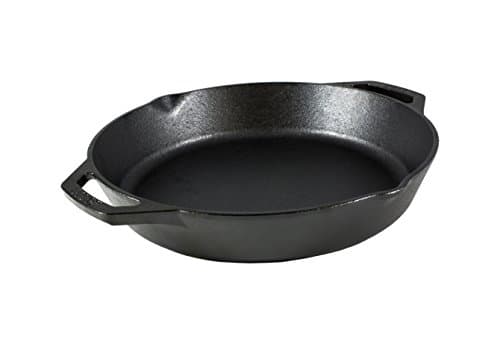
Lodge 10.25" Pre-Seasoned Cast Iron Skillet

Lodge

10.25 in walled skilletThick, pan or deep-dishWalls trap steam on a thin crust$24.42Check Price on Amazon
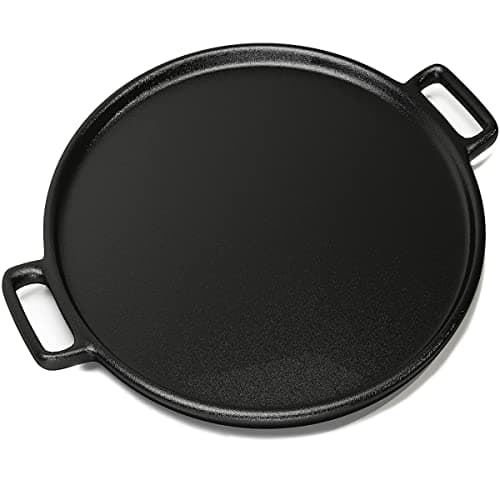
Home-Complete 14" Cast Iron Pizza Pan

Home-Complete

14 in flatThin-crust on a budgetLeast expensive, no grips included$29.95Check Price on Amazon

#ad · Live prices from the Amazon Creators API, as of October 5, 2026. Where we have no verified live price we show none rather than a stale number — we may earn a commission.

For pizza, use metal — a cast-iron pizza pan if you want a full-size round, or the cast-iron skillet you already own if you want a thick pan pizza. For bread and cookies, use a stone. These are not two brands of the same product; they are materials with opposite properties, and the deciding number is thermal conductivity. Commercial cast iron conducts at roughly 55 W·m⁻¹·K⁻¹, while insulating firebrick sits at 0.19 to 0.36. That is a difference of more than a hundred times, and it is the entire comparison.

People treat a stone and a metal plate as interchangeable because both are “a hot slab you preheat”. In practice a stone is specified to resist giving up its heat and a metal plate is specified to dumpit. Wikipedia's baking stone article states the design intent outright: because of the material's “property as a poor heat conductor, food is less likely to burn when one uses a baking stone instead of metal or glass bakeware”. Read that as a feature for bread and as a limitation for pizza, because that is exactly what it is.

What each material actually does to a crust

Cast iron and steel: fast, hard bottom heat

A pizza's problem is time. You want the base set and charred before the cheese on top overcooks, and in a domestic oven that will not go past about 550°F you have very little room. A high-conductivity surface solves it by moving a large amount of heat into the dough in the first thirty seconds. The same article notes that a quarter-inch steel plate “conducts heat better than stone” — and then, tellingly, that it “gives off too much heat for bread, cookies, and croissants”. That sentence is the whole decision in miniature: too much bottom heat for bread is exactly the right amount for pizza.

Ceramic stone: gentle, absorbent, forgiving

A stone does two things iron cannot. It releases heat slowly, so a loaf has time to rise and set before the base browns; and it is porous, so it “absorbs moisture, resulting in a crispier crust”. For a tray of cookies, a batch of rolls, or a free-form loaf, those are genuine advantages and iron has no answer to them.

What this means for your actual oven

If you make pizza once a week, buy metal. If you bake bread once a week and make pizza occasionally, a stone is the better single purchase and your pizza will be a little paler underneath. If you do both seriously, these are two cheap items and there is no prize for owning one.

The four things people actually ask about

1. Cracking

Ceramic fails by thermal shock — a cold stone into a hot oven, a wet stone, a splash of tomato on a 500°F surface, or simply age and repeated cycling. Most people who have owned a stone have broken one. Cast iron does not do this. It is the single most practical argument for metal, and it is why our pick is a pan rather than a slab.

2. Loading the pizza

Here the stone-style workflow wins and it is worth being honest about it. Launching a raw pizza off a peel onto a hot surface already in the oven is a skill. A pizza pan — iron or otherwise — lets you build the pizza on the cool pan and put the whole thing in, which is far easier and is why we rank pans rather than bare plates. The trade is a slightly less explosive bottom heat, because the pan is heating up with the pizza on it rather than waiting at full temperature.

If you want the best of both, preheat the iron pan empty and launch onto it. That is the full-skill, full-reward version, and it is what we describe in our cast iron pizza recipe.

3. Cleaning and smell

A stone is porous, which means it absorbs oil and cannot be washed with soap — stones darken, stain permanently and eventually smell of everything they have ever cooked. Iron is non-porous, takes a scrape and a wipe, and carries seasoning that actively improves with use. For a household that cooks cheese and oil onto a surface regularly, this is a bigger quality-of-life difference than the crust.

4. Weight and storage

Both are heavy and awkward. A 15-inch cast-iron round is a genuinely heavy object, which is why the Lodge version ships with silicone grips. Decide where it lives before you buy it: the honest answer for most kitchens is “permanently on the bottom oven rack”, which is also the best place for it.

Where a skillet beats both

One pizza style is categorically better in a walled pan: the thick, pan-baked, Detroit-ish or deep-dish round. The walls hold the dough up, the oiled iron fries the base and the edge of the cheese caramelizes against the wall. A stone cannot do that at all and a flat plate cannot either. If that is the pizza you want, you already own the right equipment — see the full picks on the best cast iron for pizza.

And the usual caveat on this site applies: before you buy a dedicated pizza surface, check whether the 10-inch skillet in your cupboard does the job you actually want. Very often it does.

The short answer

Quick picks

#ProductBest forScorePrice
01
Lodge Lodge 15" Cast Iron Pizza Pan with Silicone Grips
Lodge 15" Cast Iron Pizza Pan with Silicone Grips

A flat, made-in-USA cast iron round that preheats into a pizza-stone substitute — the dedicated pick for a full crisp-bottomed pie.

A full round pizza
7.2
$41.98Amazon
02
Lodge Lodge 10.25" Pre-Seasoned Cast Iron Skillet
Lodge 10.25" Pre-Seasoned Cast Iron Skillet

The honest first cast-iron pan for almost everyone. Cheap, indestructible, made in the USA.

The default first skillet
8.4
$24.42Amazon
03
Home-Complete Home-Complete 14" Cast Iron Pizza Pan
Home-Complete 14" Cast Iron Pizza Pan

The cheapest way to a dedicated cast iron pizza round — the same flat-and-heavy idea as the Lodge, minus the pedigree.

The lowest-cost pizza pan
7.0
$29.95Amazon

#ad · Live prices from the Amazon Product API, as of October 5, 2026. Where we have no verified live price, we show none — we would rather leave a gap than print a number that has gone stale.

In detail

The picks, in full

01
Lodge Lodge 15" Cast Iron Pizza Pan with Silicone Grips

A full round pizza

Lodge 15" Cast Iron Pizza Pan with Silicone Grips

15 in roundFlat, low rimSilicone grips incl.Made in USA
7.2/10

A flat, made-in-USA cast iron round that preheats into a pizza-stone substitute — the dedicated pick for a full crisp-bottomed pie.

Heat retention
9
Crust and browning
9
Handling
6
Versatility
5
Value
7

Pros

  • A large 15-inch flat surface holds a full pizza and, preheated, gives the crisp bottom crust a raw dough on a cool tray never will
  • Cast iron's thermal mass acts like a cheap pizza stone or steel: it hoards heat and dumps it into the crust the moment the dough lands
  • Pre-seasoned, made in the USA, and the two silicone grips make a screaming-hot iron round easier to move

Cons

  • One flat pan that does essentially one job — it is a specialist, not a do-everything skillet
  • Heavy and awkward to store, and a bare pebbly surface that releases better once you build seasoning
  • The low rim is deliberate for sliding a pizza on and off, but it means it is useless for anything with liquid

Don't buy this if…

…you already own a cast iron skillet or a baking steel. A skillet makes a superb deep-dish or pan pizza, and a steel bakes a thin crust hotter — this pan earns its place only if you specifically want a big flat round for classic pizzas.

$41.98View on Amazon

$49.8016% off

Price as of October 5, 2026. Prices change — Amazon's is the one that counts.

#ad · we may earn a commission from this link to Lodge 15" Cast Iron Pizza Pan with Silicone Grips

02
Lodge Lodge 10.25" Pre-Seasoned Cast Iron Skillet

The default first skillet

Lodge 10.25" Pre-Seasoned Cast Iron Skillet

10.25 inPre-seasonedMade in USA~4.5 lb
8.4/10

The honest first cast-iron pan for almost everyone. Cheap, indestructible, made in the USA.

Heat retention
9
Cooking surface
7
Handling
7
Versatility
9
Value
10

Pros

  • The 10.25" is the size that fits four eggs, two steaks, or a batch of cornbread — the most useful single size
  • Pre-seasoned from the factory, so it works the day it arrives
  • Costs a fraction of a boutique pan and will outlive you with basic care

Cons

  • The cooking surface is pebbly, not machined smooth — food releases better once you build your own seasoning on top
  • The short helper handle is small; a leather or silicone sleeve on the main handle is a near-essential add

Don't buy this if…

…you specifically want a glass-smooth machined surface out of the box. That is what Stargazer, Smithey and Field sell, at five to eight times the price — for most cooks the Lodge gets there with a few months of use.

$24.42View on Amazon

Price as of October 5, 2026. Prices change — Amazon's is the one that counts.

#ad · we may earn a commission from this link to Lodge 10.25" Pre-Seasoned Cast Iron Skillet

03
Home-Complete Home-Complete 14" Cast Iron Pizza Pan

The lowest-cost pizza pan

Home-Complete 14" Cast Iron Pizza Pan

14 in roundFlat pizza panPre-seasonedBudget pick
7.0/10

The cheapest way to a dedicated cast iron pizza round — the same flat-and-heavy idea as the Lodge, minus the pedigree.

Heat retention
8
Crust and browning
8
Handling
6
Versatility
5
Value
8

Pros

  • Usually well under the price of the name-brand pans while doing the same core job: a flat, heavy round that preheats and crisps a crust
  • Fourteen inches fits a generous personal-to-family pizza
  • A low-risk way to find out whether you like baking pizza on cast iron before spending more

Cons

  • An import with no real brand track record or warranty behind it
  • Casting and factory seasoning are a step below Lodge — expect a rougher surface and a longer break-in
  • Like every dedicated pizza pan, it is a one-job tool with a low rim

Don't buy this if…

…you want a pan to keep for decades or you value made-in-USA support. The Lodge is only a little more and clearly better made; buy this to try cast iron pizza cheaply.

$29.95View on Amazon

Price as of October 5, 2026. Prices change — Amazon's is the one that counts.

#ad · we may earn a commission from this link to Home-Complete 14" Cast Iron Pizza Pan

Quick decision table, in words

Thin-crust pizza, full size, weekly: a cast-iron pizza pan. Fast bottom heat, no cracking, build-on-the-pan loading.

Thick or deep-dish pizza: a cast-iron skillet. Nothing else shapes it.

Bread, rolls, cookies, croissants: a stone. Its low conductivity is the feature, and the source above says so in as many words.

Sourdough boules specifically:neither — a lidded pot, because the mechanism there is trapped steam rather than bottom heat. Start at the sourdough rankings.

Lowest spend that works: the 14-inch budget pizza pan above, or the skillet you already own.

A note on baking steel

Steel plates conduct at about 50 W·m⁻¹·K⁻¹, close enough to cast iron that for pizza purposes they behave alike; the practical differences are shape, price and that a plate has no rim to grab. We rank cast-iron pizza pans rather than steel plates because that is what this site covers — if you want the bare-plate workflow and have the peel skills, a steel plate is a legitimate alternative and we are not going to pretend otherwise.

What we are not claiming

We have not baked matched pizzas on a stone and a pan under instrumentation. The argument above rests on published material properties — the conductivity figures and the baking stone article are both cited in Sources and were retrieved for this page — and on the geometry of each product. Our methodology states that our scores are judgments from documented research, not laboratory measurements. Prices are live from the Amazon API with an as-of date under each table.
How we picked

We do not run a testing lab

We researched published manufacturer specifications, materials and thermal properties, and aggregated owner reviews, then scored each pan against a published rubric. The scores are judgments from documented research — they are notmeasurements we took, because we do not have a lab and we are not going to pretend we do. Where a number came from a manufacturer's spec sheet or someone else's lab, we name it in Sources.

Questions

Frequently asked

Is cast iron better than a pizza stone?
For pizza, yes: it conducts heat roughly a hundred times faster than insulating firebrick, which is what sets and chars a base before the top overcooks. For bread and cookies, no — a stone's poor conductivity means food is less likely to burn, which is the behavior those bakes want.
Cast iron pizza pan or baking steel?
Functionally close. Carbon steel conducts at about 50 W·m⁻¹·K⁻¹ and cast iron at about 55, so both deliver the hard bottom heat pizza needs. Choose on workflow: a pan has a rim you can grab and lets you build the pizza on it; a bare plate needs a peel and a confident launch.
Will a cast iron pizza pan crack like a stone?
No. Ceramic fails by thermal shock and metal does not. Cast iron can crack, but it takes serious abuse — see can cast iron crack— whereas a stone cracking is close to a normal end-of-life event.
Can I just use my cast iron skillet for pizza?
Yes, and for a thick pan pizza it is the best tool on this page. For a thin 14-inch round it is too small and its walls trap steam over the crust. Either accept a smaller, thicker pizza, or buy a flat pan.
Does a pizza stone really make a crispier crust?
For bread it helps, because the porous stone absorbs moisture. For pizza the crispness comes mostly from fast bottom heat drying and setting the base, which is where metal wins. Two different mechanisms, often conflated.
What temperature should I preheat to?
As high as your oven goes, and for longer than you think — a heavy iron plate needs a solid preheat to be worth having, and preheating cast iron properly is most of the result. Domestic ovens top out well below a pizza oven, which is precisely why surface conductivity matters so much at home.
Can I use a cast iron pan for bread instead of a stone?
You can, but it is the wrong tool twice over: too conductive for a flat loaf and open-topped for a boule. For bread, use a stone for flatbreads and a lidded pot for boules — the steam mechanism is explained in how to bake bread in a dutch oven.

Keep reading

Receipts

Sources

We do not run a testing lab, and we do not pretend to. Where a measured number came from a manufacturer's spec sheet or someone else's lab, we name them and link them. Where we could not verify something, we say so on the page rather than quietly leaving it out. Read our full method.