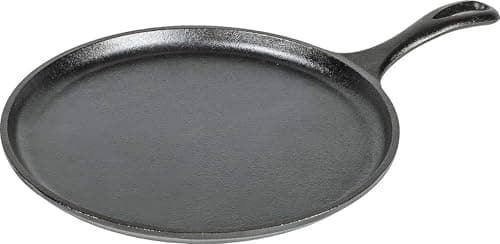
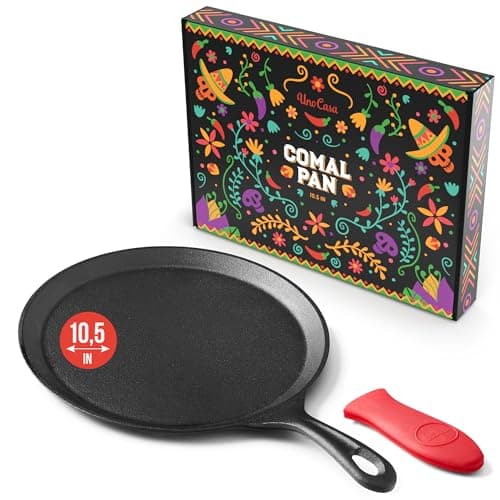
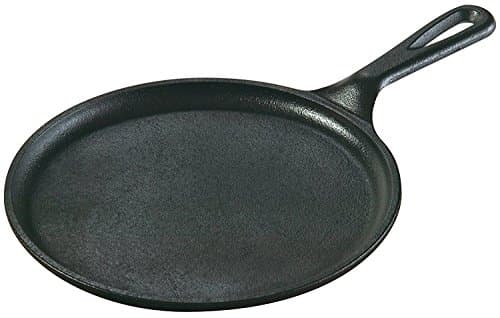
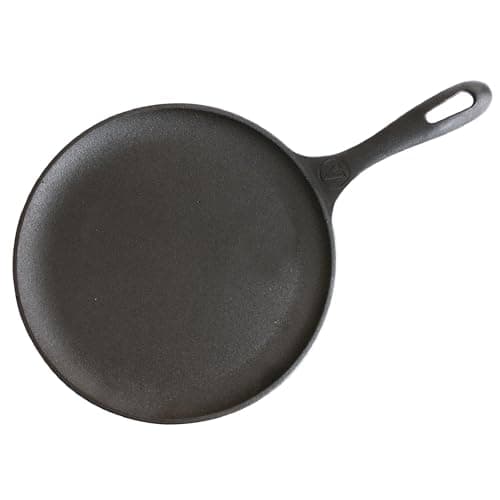
A comal is a flat, round cast iron griddle for tortillas, quesadillas, roti, dosa and any flatbread that wants steady, even heat and a little char. Our best pick is the Victoria comal — a Colombian maker that specializes in them, seasoned with flaxseed oil for a head start. The 10.5-inch Lodge round griddle is the great-value American option, the Uno Casa is a purpose-shaped comal for roti and dosa, and the 8-inch Lodge is the personal size for a single tortilla or an egg. Any flat cast iron round works; these are the ones that do it best for the money.
The whole job of a comal is even, holding heat across a flat surface, and cast iron is the ideal material for it — its thermal mass stays hot when a cool, damp tortilla lands, so it chars and puffs instead of going limp and steamy. A thin aluminum comal cools the moment food touches it; a cast iron one holds its temperature through a whole stack. Because it is bare iron, a comal seasons into a slick surface with use, so tortillas release cleanly and it takes on the dark patina that generations of cooks prize. It is the same material logic as a cast iron griddle, in the round, lipless shape that suits flatbreads.
Comal, griddle, what is the difference?
Honestly, very little. A traditional comal is a flat round with a very subtle concave or flat surface and no walls, made for tortillas; a round cast iron griddle is essentially the same tool sold under a different name. For cooking tortillas, quesadillas, roti and pancakes, a flat cast iron round is a flat cast iron round — which is why our picks include both dedicated comals and round griddles. Buy the one at the size and price you want; the shape difference is marginal and the cooking is identical.
What size comal to buy
A 10-to-11-inch comal is the everyday size — big enough for a full tortilla or a couple of small ones, a quesadilla, or a batch of pancakes. Size down to an 8-inch for single servings, reheating, or a small kitchen; size up only if you routinely make big batches for a crowd. Because a comal is flat and lipless, it is not for anything saucy or liquid — that is a skillet'sjob — but for dry flatbread work it is the right, cheap, lasting tool.
How to use and season a comal
A comal rewards a hot, patient start. Preheat it over medium heat for a few minutes until it is evenly hot — a drop of water should dance and evaporate — then lay a corn or flour tortilla straight onto the dry surface. It will toast, blister and, if the heat is right, puff; flip it after thirty seconds or so. Because the pan is dry, a comal actually stays well-seasoned with heavy use: the light oils from tortillas, quesadillas and toasted chiles keep building the surface rather than stripping it. For anything with cheese or fat, a very light film of oil keeps it from sticking while the seasoning matures. The full method is the same as any bare pan, covered in how to season cast iron.
Cleanup is the easiest of any cast iron piece. Most of the time a comal needs nothing more than a wipe with a dry or barely damp cloth while it is still warm, because dry flatbread work leaves little residue. If something does stick, a pan scraper or chainmaillifts it without harming the seasoning, and you dry it on the burner and wipe a whisker of oil as with any bare iron. Avoid long soaking — a flat, lipless pan left wet in the sink is a pan that rusts. Treated this way, a comal darkens into one of the slickest, most low-maintenance surfaces in the kitchen.
How to choose a cast iron comal
Size to your flatbread
Match the comal to what you cook: a 10.5-inch round handles a full flour tortilla, quesadillas and pancakes; an 8-inch is right for corn tortillas, single servings and reheating. If you make big batches for a family, the larger round saves you working in rounds.
Pre-seasoned and ready
All the picks here arrive pre-seasoned, so they work from the first tortilla, but like any bare iron they get better as the seasoning builds. The Victoria is seasoned with flaxseed oil for a slightly slicker start. Grease lightly for the first few uses and the surface releases better each time.
Handle-less by design
Most comals and round griddles have no long handle, just small tabs or none at all, because they sit on the burner and you work off the top. Keep a towel or a handle holder nearby, and lift with two hands. It is the trade for an even, unbroken cooking surface.
Care is standard bare-iron care
Wipe or scrape it clean while warm, dry it, and keep a thin film of oil — a comal that chars a lot of dry tortillas actually stays well-seasoned with little effort. Avoid long soaking, and it will darken into a superb nonstick surface. The routine in how to clean cast iron applies.